
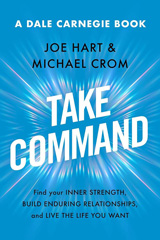
Take Command: Find Your Inner Strength, Build Enduring Relationships, and Live the Life You Want
(Employee Engagement for Manufacturing Leaders)
| Joe Hart and Michael Crom, 2023
Subscribe at manufacturinggreatness.com/subscribe
What Take Command Means for Employee Engagement in Manufacturing
Almost every employee engagement problem I have worked on in a plant started as a conversation that went sideways. Not a process failure, not a pay issue. A conversation.
Here is one from this book. A temp fresh out of college is fixing a machine with a coworker who is sixty-five. The older guy is using a manual screwdriver and it is taking forever. The kid suggests an electric one. The older guy does not miss a beat. That's the problem with your generation. You're just lazy. The kid fires right back. We're just more efficient.
Eight seconds. Two people who want the exact same thing, a machine running, and they have just guaranteed that neither one gets it.
That is what Take Command is about, and it is why a Dale Carnegie book belongs on a plant manager's desk.
What’s It All About?
Joe Hart is the CEO of Dale Carnegie. Michael Crom is a board member and Dale Carnegie's own grandson. So this book carries weight before you open it, since it is the official follow-on to How to Win Friends and Influence People, nearly ninety years later.
It runs in three moves, built on interviews with more than a hundred high-performing leaders. Take command of your thoughts, then your relationships, then your future. Every chapter closes with a principle and action steps you can run tomorrow.
Call it modern-day Dale Carnegie, written from a sitting CEO's chair. Joe opens at three in the morning during COVID, awake, certain the 107-year-old company he was running would fail under his leadership.
The Big Idea
Dale's first principle was don't criticize, condemn, or complain. He put it first for a reason.
The distinction the book turns on is the one most of us blur. Feedback is necessary for growth, and criticism is destructive. Same information, two different outcomes, and the difference is not what you said. It is what you wanted when you said it.
Cameron was right about the screwdriver. He was still criticizing. What turned it around is the part I want every supervisor to read. He stopped telling and started asking Paul why he did it his way. Eventually Paul came to him, asking how to improve production output and save time on the line.
The old guy who wouldn't change brought the improvement ideas himself. All it took was one person getting curious first.
Favorite Quote
“Nothing damages relationships and trust faster than criticism.”
Read that again and think about your last shift. We tell ourselves we are giving feedback, that we are just being direct and honest. Meanwhile the person hearing it files it under criticism, and the trust drains out until they stop bringing you problems at all.
Joe is honest about his own version, and it is not what you expect from the guy who runs Dale Carnegie. He spent years avoiding direct feedback, tiptoeing around the real issue. What changed his mind was deciding that withholding it is not kindness. It is a failure of respect.
Biggest Takeaway
The engagement problem on your floor is a relationship problem. It is not a process problem, and you cannot fix it with another program.
This intrigued me. The book cites Jean Twenge at San Diego State, who studied 8.2 million US teens going back to the 1970s. In the late 1970s, fifty-two percent of twelfth graders got together with friends almost every day. By 2017, twenty-eight percent did. The drop got steep after 2010, right as smartphones took hold, and loneliness climbed with it.
Now do the math on who that is. Those teenagers are the people we are hiring right now. They came up with fewer reps at being in a room with someone who annoys them, and we are handing them a job where that skill is the whole job.
Here is the part most leaders get backwards. The assumption is that a generation on screens nine hours a day wants to be left alone, so we send a message instead of walking out to the line. The research says the opposite. They are the loneliest cohort on record. The plant that leans into face-to-face conversation wins the exact people everyone else has given up on reaching.
Bonus Information
Alan Mulally shows up near the end, and for our industry that story carries one of the greatest impacts. Ford in 2006 was staring at bankruptcy. What Mulally did first was not a restructuring plan. He went and looked, studied competitors, and mostly asked questions, because having the title did not mean having the answers. Three years later Ford posted a full-year profit of $2.7 billion and was the only American automaker that never went into bankruptcy court and never took the federal money.
If you want that one in full, I reviewed American Icon by Bryce Hoffman a while back. Ford has always been personal for me, since I spent four years at the plant in Talbotville building Crown Vics and Grand Marquis.
But Alan is one story out of dozens, and that is the point. Joe and Michael took nearly ninety years of Dale Carnegie principles and filled the book with real people you will recognize. A temp and a screwdriver. A guy who sent one defensive email and lost a friend for good. A CEO awake at three in the morning. You do not have to run Ford to see yourself in this book. You just have to have had a conversation go sideways.
Take command does not mean giving commands. It means being more curious.
If you want more like this, I review one manufacturing leadership book a month in the Manufacturing Greatness newsletter. Free, and built for the shop floor.
You can find Take Command: Find Your Inner Strength, Build Enduring Relationships, and Live the Life You Want on Amazon.
Subscribe at manufacturinggreatness.com/subscribe
Reviewed by: Trevor Blondeel, October 2026