
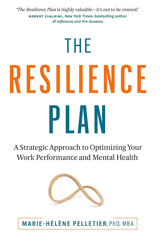
The Resilience Plan: A Strategic Approach to Optimizing Your Work Performance and Mental Health book review by Trevor Blondeel
| Marie-Hélène Pelletier, 2024
What’s It All About?
In manufacturing, we spend a lot of time talking about productivity, safety, and performance. What we don’t always talk about is the pressure leaders are under while trying to deliver those results. Plant leaders, operations managers, and supervisors are often balancing labor shortages, production targets, and constant change. Over time, that pressure can quietly wear people down.
That’s why Marie-Hélène Pelletier’s book The Resilience Plan: A Strategic Approach to Optimizing Your Work Performance and Mental Health resonated with me.
In The Resilience Plan, Marie-Hélène doesn’t present resilience as something soft or motivational. She approaches it the way many of us in manufacturing think about improvement: as a system you can build and maintain intentionally. Her framework focuses on helping leaders sustain performance over time instead of constantly running in survival mode.
What stood out to me is how practical the model is. She talks about resilience as something you can strengthen the same way you would improve a production process. By understanding where your capacity is being drained, you can put small practices into place that protect your energy and focus.
For leaders responsible for plant leadership, operations management, and performance management, this perspective is incredibly useful. When leaders are exhausted, decision quality drops, communication suffers, and the entire team feels it. Resilience isn’t just personal well-being. It becomes a leadership responsibility that supports sustainable performance.
One of the things I appreciated most is that Marie-Hélène acknowledges the reality many leaders experience. You can be competent, hardworking, and committed to your team, and still find yourself stretched too thin. The solution isn’t working harder, but building a more intentional approach to how you manage pressure, energy, and expectations.
Favorite Quotes
“Resilience is not about pushing through at all costs. It’s about creating the conditions that allow you to sustain performance over time.”
Biggest Takeaway
My biggest takeaway from The Resilience Plan is that resilience is not something you either have or don’t have. It’s something you can build with structure and awareness.
In manufacturing, many leaders earn promotions because they are technically strong and capable of getting results. But as responsibilities grow, the demands increase as well. Leaders suddenly find themselves responsible for people, change initiatives, safety, quality, and production, all at the same time. Without a plan, that pressure can lead to burnout or decision fatigue.
Marie-Hélène encourages leaders to think about resilience as a leadership capability. By paying attention to how you manage energy, priorities, and expectations, you can protect your ability to lead effectively even during challenging periods.
That idea connects strongly with what I see in manufacturing organizations. When leaders are supported and resilient, communication improves, teams collaborate better, and performance becomes more sustainable.
Bonus Information
Instead of abstract ideas, The Resilience Plan offers tools leaders can use immediately.
Marie-Hélène encourages leaders to regularly check in with themselves and ask questions such as:
- What is currently draining my energy?
- What support do I need to sustain my performance?
- What small adjustment could make the biggest difference right now?
These kinds of reflection points help leaders stay proactive rather than waiting until stress becomes overwhelming.
For leaders navigating change management, talent retention challenges, and demanding operational environments, these small adjustments can have a significant impact. When leaders take care of their resilience, they strengthen their ability to communicate clearly, make better decisions, and support their teams effectively.