
Improving Manufacturing Retention Through Purpose, Optimism, and Better Relationships
Manufacturing leadership is becoming more complex every year. As the industry continues to grow and change, frontline leaders face new pressures, demands, and constraints. But in this complication world, the answer isn’t always more systems or tools. Instead, manufacturing leaders need simpler, human solutions.
If you want to strengthen culture, boosts engagement, and drives operational excellence — without adding any extra or unnecessary complexity to your already busy schedule—here are four ideas to implement today.
#1. Meaning Drives Engagement and Retention
People want to know their work matters. In manufacturing, meaning is everywhere. After all, you and your team transform raw materials into something the world relies on—what’s more meaningful than that?!
As a leader, it’s up to you to bring that meaning to the surface. When your team understands how their role impacts customers, safety, or critical operations, engagement will rise.
#2. Optimism Is a Leadership Skill, Not a Personality Trait
Manufacturing is unpredictable. Equipment fails, schedules shift, and problems can snowball fast. By showing optimism in the face of everyday challenges, you develop to ability to see challenges as temporary and solvable instead of catastrophic.
However, optimism doesn’t mean avoiding issues and pretending everything is fine. Instead, it’s all about realistic confidence and looking for ways you and your team can fix issues and move forward. With an optimistic mindset, you’ll foster continuous improvement and keep your team from falling into blame or discouragement.
#3. Relationships Are the Engine of Manufacturing Culture
If you want a high-performing plant, you can’t rely on fear or hierarchy. You need trust. To build trust, don’t overlook the small moments. Learn your team member’s names, take the time to learn about them, and always try to check in and practice curiosity on the floor.
Micro-interactions like these build the foundations for trust and stronger relationships. Over time, this will strengthen communication, collaboration, and accountability. In turn, this will drive productivity, improve retention, and help you create a workplace environment where people love to work.
#4. Excellence Is the Outcome, Not the Starting Point
We all wish operational excellence could appear overnight. In reality, improved excellence won’t just appear because you want it to. It can only happen when meaning, optimism, and strong relationships are already in place.
To make this happen, focus on your people. Make sure they feel valued, supported, and understood. With improved support and better relationships, your team members will naturally take on more ownership, offer their own solutions, and feel motivated to drive the improvements you want to see in your organization.
Learn More on Mindfulness Manufacturing
Manufacturing may always be demanding, but leadership doesn’t have to be complicated. By focusing on fundamentals like these, you’ll creates teams that are resilient, engaged, and ready for whatever comes next.
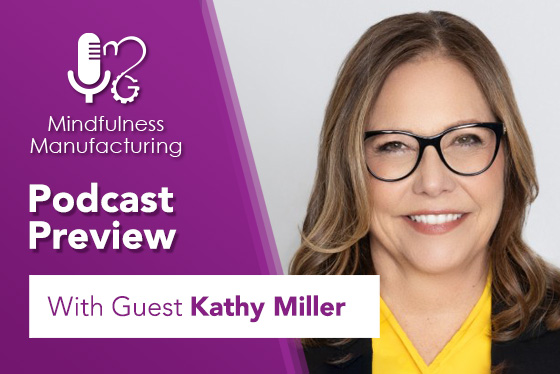
To learn more, listen to this new episode of Mindfulness Manufacturing featuring returning guest Kathy Miller. Kathy is a member of the Women in Manufacturing Hall of Fame and has held leadership roles at General Motors, Delphi, and Rolls-Royce. She is also the co-author of Steel Toes and Stilettos and author a new book, MORE Is Better, which introduces practical frameworks for frontline plant leaders.
In this episode, Kathy draws on both her manufacturing experience and her master’s degree in applied positive psychology to discuss the pressure and demands faced by modern manufacturing leaders. She also shares practical tools and frameworks today’s leaders can use in their own plants to strengthen culture, boost engagement, and drive operational excellent without adding any extra layers of complexity.
Listen to Kathy Miller on Mindfulness Manufacturing here.